The traffic home was murder tonight. They have closed the little level crossing which spans my path to work, and everyone is having to drive through the town instead.
Cursing in the newly acquired Autumn darkness, desperate to get back to my children, I inched my way around roundabouts and sat eventually under a flyover which towered over the little line of cars crawling underneath.
And there, I looked up. And what I saw flung me back twenty years, to when my world was young and carefree and penniless.
The News offices where we worked were in the middle of a new town. We sat by the phones hunched over 1950’s imperial typewriters while all the modern newsrooms were sporting state-of-the-art green-type Amstrads.
It was an underfunded office, but it ran on the stuff of youth: all that static energy from a bunch of over privileged, affably arrogant youngsters must find its way to earth somehow.
Any call was pounced upon: it might be a crash, or a fire, or a riot, or just a church fete. One never knew.
But the news story that concerns us did not need a phone call.
One warm summer day the skies grew impossibly dark. The typewriters paused as the clouds gathered strength and definition. Finally, just after lunch, the heavens broke.
We didn’t think much of it at first. But we watched as, hour after hour, the skies continued their deluge.
About three o’clock my editor ordered the exodus. Out, he said, looking for all the world like a slightly stern walrus, go and find the stories.
Three of us piled in a little car and headed out together.
And we didn’t have far to go. When we got to the flyover we looked down to see a lake had gathered in the bowl junction underneath.
Never in my twentysomething years had I seen this bowl flooded before: and to my knowledge it has not happened since.
We screeched to a halt and jumped out. I have a recollection that two of us were wearing strappy sandals and took them off, the better to run across the sodden grass to the side of the new pond.
And we ran in the exhilaration of that fat Summer rain, laughing at a chance occurrence which had transformed an afternoon.
As a poignant cherry on the cake, in the middle of the newly formed glassy surface floated a car, its emergency lights clicking on and off in indescribable pathos.
We summoned the office photographers. This was a picture for the front page.
I was sitting, in this dark traffic jam, in precisely the same place where that car, all those years ago, had floated. The red lights illuminated the cavernous rafters of the bridge like the inside of some great biblical whale as I looked up and remembered.
What a transformation. From daytime, to nighttime. From midsummer warm rain to late Autumn drizzle. From young reporter to seasoned teacher and mother.
We so rarely take a look at these unassuming backdrops, the humble scenery for life’s dramas.
Noel Coward put his finger on that love of place with a beautiful play – later made into a film- called This Happy Breed.
This is one of the very few plays that Coward ever wrote which dipped below the upper middle classes. When it premiered in the wartime years, it had to compete with Present Laughter and Blithe Spirit for the stage.
It deals with one family, the Gibbons family, headed by Frank and Ethel: a working class clan. It starts in June 1919,when the family walks into its new house in Sycamore Road, Clapham; and it finishes twenty years later in June 1939, when Frank and Ethel are about to move out to the country.
What a difference twenty years makes. The play takes us through the general strike of 1926, Edward VIII’s abdication and Neville Chamberlain’s Munich agreement.
But these events in turn are a backdrop to the family’s dramas: falling in love, a wedding, a daughter running away, the tragic death of a son and his wife in a car accident.
Coward is known for brilliant wit: and if that is not enough, who can forget Mr Bridger, financing Charlie Croaker’s mad mini-centric scheme in The Italian Job?
But in this gem of a play he brings the whole world to the interior of one house with the most subtle, insightful compassion.
All human life, in those four walls. He really was quite an extraordinary man.
One last temporal backdrop before the curtain falls for tonight. Every night Phil and I listen to a story as we sleep. For the last week or so, it has been Pooter and his diary, but last night, inspired by All Hallow’s Eve, we turned to The Woman In Black.
Susan Hill’s tale was only written in 1983, but you would never know it. She narrates her story, cloaked as a young ambitious Edwardian lawyer who is called out from London to the Norfolk coast to deal with the muddled papers of an old lady who has just died in a desolate house on the coast.
She lived there for much of her life, it seems. The house is on a tidal road called the Nine Lives Causeway. At high tide, it is completely cut off from the mainland.
The first time lawyer Arthur Kipps glimpses the house, it is bathed in sunlight, and he indulges in that seaside fantasy we all try out for size: what if I bought it and came to live here?
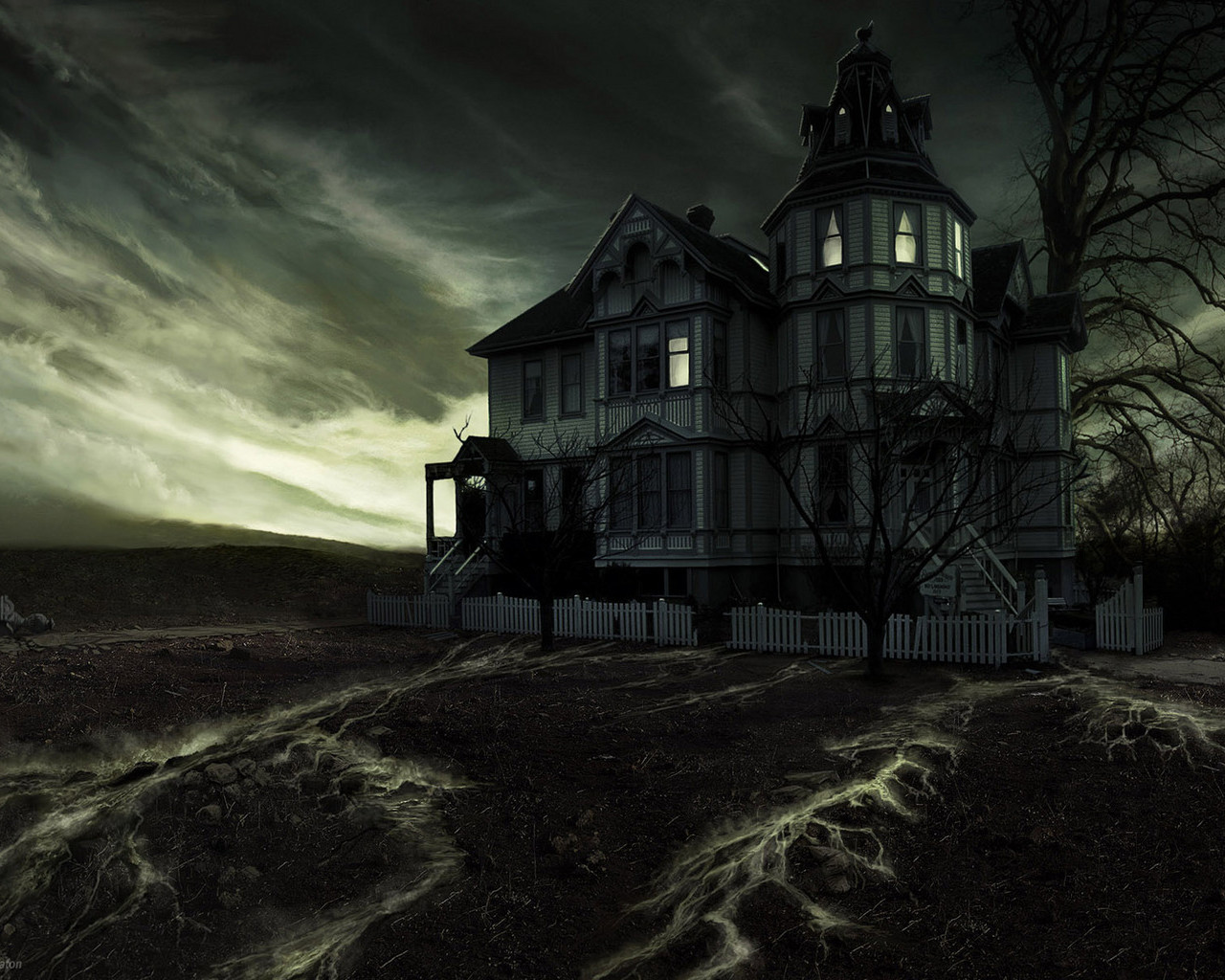
But the house has the darkest of secrets and is wedded to tragedy. Hill uses the gaunt Victorian building with breathtaking virtuosity, to mirror the rising unease of the man who has come to attempt to bring order.
The house changes its character: dark and brooding, swathed in a sea fret, grey and oppressive, bathed in sunlight. It plays its own tricks, fitted with an ancient and erractic generator, slamming doors, echoing staircases and corridors.
And always, the building is partnered by the sea and its desolate East English landscape.
We all have backdrops: places which have supplied the scenery for important moments of our lives.
And it seems they do not need any exaggeration to hold drama for us.
Those visual cues are buried deep in our minds so that the tiniest event can spark a memory: a view from a window, a house on a shore: even a moment of stasis in a traffic jam.
All these things remind us of times past.
 Kate Shrewsday
That’s the second mention of ‘The Woman in Black’… and I’ve never read or seen it, so maybe that should go on my list of must reads?
Lovely memories.
A flood does transform a scene. For a while I lived back at home, and nearby Bewdley on the River Severn frequently broke its banks and washed into the houses, the water up to upstairs window sills it seemed. (They have done something about the flooding now I believe) http://www.geography.org.uk/resources/flooding/bewdley/whathappened/
Devastating for a house, as the floods over the past few years have demonstrated. But it seemed to have no long term effect on the road. What happened to the little car, I never saw:-)
If you haven’t the time to read, the stage show is a fabulous example of what can be done with three actors and a wicker box. But the end can be a bit much for some. I spoke to someone today who went to see it at the Fortune last week, so it’s still going strong….
Like Pseu I should find The Woman in Black immediately.
As for the backdrops, a very inspiring theme 🙂
As I say, the theme ambushed me…strange when a place suddenly evokes memories with such strength.
The Woman in Black is just your kind of thing, Cindy:-)
Kate, Where did you get the appetite for the macabre? I guess you read “A Century of Creepy Stories” at too young an age! So the blame lies somewhat with me.
But the idea of place evoking memories is a very interesting one. We older folk have
the habit of wishing to re-visit places we have known (and usually been happy).
I had a friend, John North, who was also a radio amateur, who lived in a village called
Bainton, near Driffield in East Yorkshire. He was a much older chap than I, who was
gauche in the extreme, but he had a life full of interest, being an organist, a scientist, and having a great interest in farming around the district. So there was much to learn from this retired man.
When visiting East Yorkshire last year, I had a sudden urge to revisit Bainton, and found it almost unchanged since I was there. John is long gone, but the memories linger on for me.
Place and memory exactly.
Love Dad
Lovely illustration, Dad. And I would never have heard of John North had in not been for Bainton:-)
You have stirred up the pot, Kate, and have quite a few of us here in the States on the lookout for The Woman in Black. I love that you and Phil listen to stories before going to sleep. we usually have the television on, my eyes closed, a book slipping from my hand, startling me, and Tom, as it drops to the floor . . . hmmm
It is amazing, isn’t it, how our memories can be stirred just by looking up or out or down and we are brought back to another time. Lovely piece, Kate.
It’s a great way to read. having someone else do it for you, Penny:-) But I doze off and wake in the middle of the night to a completely different part of a story. There are still parts of some books that come as a surprise!
Enjoy the Woman in Black:-)
This Happy Breed–I watched an old black and white film of that years ago I’m sure. Must see if Youtube has it.
On floods: I worked at the children’s hospice with a nurse whose house had been flooded 3 times. It was wrecked and she was desperate to get away, but knew she would never be able to sell the place.
Eventually the council put some flood defences in.
It was either that or we’d have to build an Ark.
It is enough to make one go to live on a barge! Watching the upheaval cause to those whose houses were flooded during the great floods of the last few years has been sobering. It really is life shattering, especially as some have it happen more than once. We moved out of our house about two years before it became one of those blighted properties, flooded regularly by the Medway. Sympathies to your friend.
Enjoy This Happy Breed. Coward is such a treat.
Such an evocative and thought-provoking post, thank you, Kate. You are a diamond mine of literary knowledge!
Thank you! I appear to know more than I do though:-D
Loved your post on patterns. And those Zebras! the photographs are amazing!
Those visual cues are buried deep in our minds so that the tiniest event can spark a memory: a view from a window, a house on a shore: even a moment of stasis in a traffic jam.
ah, beautiful!
i want to keep this somewhere.
Well I guess it sums your approach up, doesn’t it, UE? Visual cues and snatches of words thrown together with breathtaking virtuosity. I truly do feel humble every time I visit.
i think you’re helping me figure it all out kate.
thank you!