Packed lunches are a work of art in my house.
Note that I make no claims for the packed lunch boxes. They seem to get dilapidated so quickly and are expensive to replace.
Felix is fitted with a genome which ruins them. He decorates them with unsightly stains that even a washing machine cannot remove, and separates the plastic lining from that little ineffectual layer of foam which they put in, I know not why.
I have observed, in my years as a teacher, an unsettling habit in those who observe the packed lunch eating process.
It is Lunchbox Gazing. It consists of a grown person clocking the most disgraceful lunchbox, and then attracting another adult’s attention.
This done, the gazer assumes an expression of such funeralistic woe, an undertaker would find it hard to compete.
“Look at that,”the adult intones sorrowfully. “Poor mite. What kind of mother sends her child in with a box like that? It’s a disgrace!”
Occasionally, I have been called in to second the motion.
But since I send in lunchboxes almost identical to the ones being mourned, my pantomime woe is generously laced with hypocrisy.
I shake my head and I say I know, I know, who would do a thing like that, and all the time a fifteen megapixel picture of Felix’s offering is emblazoned across my mind.
I do, however, make sure the unsightly containers are clean. And then I pack them with a cornucopia of treasures to equip my son with lunchtime treats to guarantee both health and delight.
Home made bread forms the sandwiches, cakes and shortbread have never seen the inside of a shop: and there is always a generous lacing of fruit to build up strength for playtime.
Every now and then, I include something which inspires plenty of delight, but maybe a little less health.
This week I wavered next to the hula hoops counter, and my hand involuntarily reached out to grasp the opportunity of a little light junk food.
And this morning seemed the perfect opportunity to offer my son something with zero vitamins, high fat content and the potential to crunch loudly for maximum impact.
“Felix: would you like a fairy cake or hula hoops?” I queried.
Well, hula hoops of course, he replied. No surprise there. And then it occurred to me that there was a question I had never asked before and the answer might be enlightening.
“Felix, why do you like hula hoops more than fairy cakes?” I asked.
“Because they’re faster,” he answered prosaically.
Now I love my food, I really do, and I have passed this onto my offspring. I love flavours, textures, even colours. I adore savoury and sweet, cheeses and meats and pulses and cereals, healthy and unhealthy.
But never, in all my years, have I heard speed used as a criteria for a foodstuff. Probably, I admit, because I have never asked a little boy before.
Apparently the fairy cake takes an age to munch and process. But the hula hoops, nutritionally bankrupt as they are, take less chewing and disappear faster.
Thus ensuring Felix loses less playtime.
Eating should be a leisurely activity, but Felix knows his playtime is finite. He will rush anything to get out on the field with that football and those compatriots.
We in 21st century England are fortunate. We have an ethic which includes playtime, and we grab our leisure with both hands.
We do not have to work from dawn till dusk, seven days a week to stay alive. The bad old days of the English Industrial Revolution are but a faded social memory.
We call ourselves overworked, but we have weekends and evenings in which to kick off our heels and pour a glass of something refreshing.
A while ago I read a children’s story to Maddie. It was by the brooding, atmospheric author Joan Aiken, the daughter of poet Conrad Aiken, and it was called ‘Is’.
Aiken was a writer of the highest calibre, who knew all the mystery and all the darkness of which the human heart was capable.
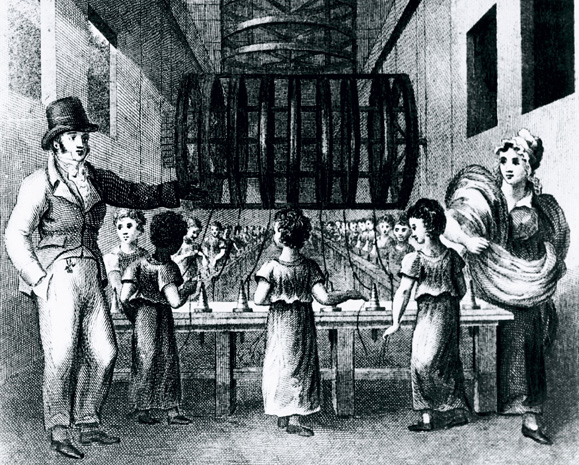
England’s social memory endured in her mind, and she could draw one into a time when children were drafted in as relentless labour in order to line the silk pockets of sleek men of industry.
She worked cleverly, splicing an extra era into the fiery furnace of England’s history. She hypothesised that James II was never deposed in a glorious revolution: but those from the house of Hanover remained to rebel and create trouble at the least opportunity.
The story follows the quick-witted, good hearted Is as she meets James III by chance. The king’s son has gone missing, and she is charged with finding him.
Word on the street says the king’s son has been spirited away on a secret train which travels up north regularly. Children are promised freedom from care and a life of leisure, if only they arrange to get on.
Of course, the train delivers nothing of the sort. The children are jumping on a train to slavery, a hell on earth.
Aiken was a poet’s daughter and her vivid portrayal of child labour in a coal mine is laced with brimstone. Until I read this work I had never properly considered how few years separate us from the years when children could be put to work. It is a brilliant read and a salutary reminder.
As is the work of Charles Dickens. His social comment on the times in which he lived is flawless.
Look at Oliver, a boy who never knew a moment’s play for much of his early life.
Born under the Poor Laws, he had no-one to fight his corner. As soon as he could work he was moved to a workhouse to pick oakum- unpicking rope to use in a tar preparation. Going up in the world, for him, was represented by a move to being a child mourner, after he narrowly escaped that hell on earth, a post as a chimney sweep’s assistant.
For the worlds of Aitken, and for Dickens, play is not an option. But these days it is enshrined in international law: the UN Declaration of Human Rights tells us “Everyone has the right to rest and leisure, including reasonable limitation of working hours and periodic holidays with pay.”
For Felix, the only thing that stands between him and his playtime is lunch.
I dream of a time when every child can say the same thing.
 Kate Shrewsday
Hi Kate. Reading this on Paddy’s PC. Good stuff.
This is the last day I shall read your blog until next weekend, but good one, Love
Love Dad
Ho hum, Dad, when you’re in the wilds of Scotland blogs come second to that buffeting wind and the west coast surf outside the window…thank Paddy for the use of her PC in the interests of the blog….
“Because they’re faster,” he answered prosaically.
I laughed out loud, as they say, at your recounting of this!
Thanks Pseu:-) Felix is a fabulous supplier of peerless one-liners!
I was just leafing through The Authenticity Hoax by Andrew Potter today. He warns against pining nostalgically for the simpler days of yester-year as we lament our current societies. Those days we yearn for were not the perfection we imagine them to be, as your read through Aiken and Dickens reminds us. Yes, we do indeed have it good these days. But not in all parts of the world- yet…
Ooooh, Zoe, that sounds a great read, thanks! I am forever telling the children how lucky we are to have been born where we were, when we were. another century or another place and life could be so different.
A child’s take on the world is a fascinating thing.
Thank you for sharing this.
Hello Kristine:-) Thank you for reading.
Now you’ve made me cry.
I want to read Is (which appears to be titled Is Underground here). Have you read Katherine Paterson’s Lyddie? It’s the (wonderful) story of a “mill girl” in Lowell, Massachusetts. It gave me information omitted by my history texts (which said the girls made good money, dressed well, and formed literary and debating societies, but not that they tried to form labor unions [or needed them] or anything remotely controversial [as defined in Texas]). I feel a blog post coming on.
Lucky Felix. I googled hula hoops and fairy cakes, and they look delicious, and fairy cake is a much better name than cupcake. But he’s right–they take time to eat, and it’s impossible to keep the icing from sticking to your fingers and face. Mine, anyway.
Hi Kathy, yes, you’re right – I think the book was only published in the UK for a whiile, and made it to two words when it went international. It is an astounding read. And my next literary stop will be Lyddie, preceeded only by that blog post of yours.
I always forget we have odd terms for food here, thanks for doing that extra food research:-) Please tell me Texas has the equivalent of hula hoops…they are one of my chief delights in life and the reason I’m not a size 0…
It’s sad that child labour is still so prevalent the world over.
I’ve no idea what hula hoops are, but Felix makes perfect sense re the speed bit.
My child’s lunch boxes are a traumatic business for me … she will please for ‘knife and fork’ food …
BUt what better person to plead to? I shall stay glued to your posts for some ideas. I think Felix might have passed the stage where a fork is a trebuchet and pasta mere ammunition.
Well done, Kate, and a reminder that, while a great deal has been done to protect the children of the world and to give them time to play, there is so, so many children that need to be taken care of. Then again, I wonder at the incessant amount of time we spend here in the states testing our kids.
Hula hoops. I had to look them up. Hula Hoops were big round rings we used to play with as kids. They went around your waist and you moved your hips to see how many times you could make it rotate. As I recall, I was fairly good at it. My big hips helped. ha Your hula hoops look to me to be quite yummy.
“You know- for kids!” 😀 We have them, and we call them simply, hoops. Minimalist approach. They are far, far healthier than our hula hoops…with you on the testing, we’re the same and it’s insane. Time to stand and stare is what we need..