Courtesy of http://en.wikipedia.org
This little middle-English word – meaning outward appearance – how it dominates our lives.
I have an ongoing Facebook bottom debate with my friend Wendy. We vie for whose is biggest and most out of control. I doubt we will ever agree.
I rarely quote from the work of Walt, but there’s a moment in that wonderful animation, The Incredibles.
It’s a family of superheroes. Clever, really, because we immediately batten our own identity onto our corresponding super.
Mum Helen Parr is just fabulous. She has been gifted the voice of Holly Hunter, soft and lyrical and so clever.
She used to be the best of the superheroes, fearless Elastigirl, quickfire and without equal. While she wooed her husband, she also beat him to the criminals.
Marriage and children does to her what is does to so many women: they remain a hero but become invisible. No-one sees the miracles they are achieving, because their nails are bitten and make up only goes on on high days and holidays.
Their appearance belies their special powers.
So it is with Helen. She settles into the chaos of motherhood and becomes, in the eyes of all around her, ordinary.
Right up to the moment her husband is caught up in a sticky Super situation.
She calls in a favour, cadges a jet, and hires a babysitter. And piloting the jet, she sets off to rescue her husband right back.
There is a moment when she finds the secret fantasy island and makes her way inside the Bondesque volcano. She is walking along a corridor of mirrors.
For a second there, she turns and looks at her reflected rear. And sighs wistfully.
Our visage: the way we express, and move, and look: it is so important to us. And it dictates how others see us, make no mistake about it.
Professor Albert Mehrabian is Professor Emeritus of Psychology, UCLA. He has spent around 50 years looking at the way we human beings communicate feelings and attitudes.
I had better tread carefully here. The statistics cited in his seminal piece of research, “Silent messages: Implicit communication of emotions and attitudes”(1981), simplifies the business of communicating feelings and attitudes to data, and those who use the resulting statistics are often critisised for framing them inaccurately.
But they show how the visage- the appearance, the ‘the conscious and unconscious movements and postures by which attitudes and feelings are communicated’ (Oxford Dictionary) can dominate someone else’s first impressions.
The study concludes that only 7% of message pertaining to feelings and attitudes is in the words that are spoken.
Conversely, 38% of that message is paralinguistic – it is communicated in the way the words are said; and 55% is carried in our facial expression.
The evidence of our eyes and ears dominates the words we say.
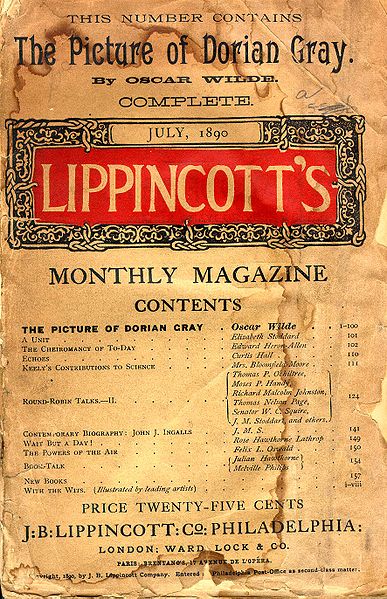
A certain Mr Gray found a way to subvert that very evidence, and confound the very passage of time.
Oscar Wilde’s sophisticated Adonis, Dorian Gray, is a parable, told superbly by one of the most compassionate writers I have ever known. Wilde’s wit is legendary, but I find his wisdom eternal.
Dorian Gray is a stunning young man who holds all in his thrall. One day, an artist paints a portrait which is his visage: not just what he looks like, but who he is.
Dorian that day stands at a crossroads. He tosses out a wish that the portrait should carry the weight of everything he does, all the decisions of his life.
And then he proceeds to lead a wicked life. He finds the most promising and innocent of lives and finds pleasure in ruining them. He betrays, murders and drives others to suicide.
It is not Dorian who shows on his outward visage the scars of this evil, but his portrait, locked up there in his attic. True, it grows older. But it also shows, in stark visual form, what real evil can do to someone.
All his life Dorian escapes detection. He even tells one little village girl that he is truly wicked, and she says he cannot be because only old people can be wicked.
It is only when he dies that he and the portrait change places once more, and his body can only be identified by the rings on his wizened hands.
My husband had his hair cut the other day. He transformed overnight from Radovan Karadzic to George Clooney. I am not shallow, but it did make a difference.
Similarly, I have begun to be somewhat of a cyber-Robinson Crusoe, marooned on my cyberisland with myself for company. While I have not grown a long dishevelled beard- that would be preposterous- my visage has changed radically.
If Phil can get his hair cut then I can paint my toenails.
So today, they are bright pink and I have hired a jet to take me off the island for at least 22 hours of every day.
But there is another visage I need to take care of. And it is barely human.
This site has looked the same since I started it, way back in those balmy Summer holidays. It has served me well but I do get irritated when I have to find my way to earlier posts, clicking back arrows and suchlike.
And , like any woman, I just feel the need for a change.
So, as with any new make up and accessories, the next few days might get a bit experimental. I’ve picked out a red dress, but I have to make sure I have somewhere to stash all those necessities like past posts, an RSS feed and my beloved photographs.
I’ll look a bit different, but if it’s any consolation, my bottom will be the same size, and I can guarantee you I have no portraits sitting up there in my dusty attic.
 Kate Shrewsday
I love this post, Kate – and I think your writing is incredible. Your ability to spin a story round and round and bring it home is admirable. I look forward to your new visage. It is fun, is it not, to try on new clothes? Penny
PS I love The Incredibles. Each time I watch it, I see something different.
Penny, you are very kind:-) Yes, to be honest I have had many times when I almost changed the theme but didn’t, because blogs are so much a visit of habit, aren’t they? People want the same old look, because its like a baggy old teddy bear they give a hug to just before bedtime. But there’s one theme I have come back to again and again, and as long as I can get those big flappy irises up on it, I think it might be a good fit. We will see.
They’re wonderful, the Incredibles….might have another viewing this evening.
The irises are beautiful–all your photographs are–but I know what you mean about change. I’ve broken the consistency rule at least a dozen times since I started blogging. And I’m feeling the itch to do it again.
Personally, I don’t care what your blog looks like as long as you keep putting words on it.
This is good, Kathy, because I’m about to get experimental. The irises are a personal favourite: they come from a Cornish stately home which is only open for a few days a year. I’m going to try to fit it on somehow….I love all the changes on your site. Especially that wonderful statue which made your masthead photo for a while.
I must confess to a feeling of some confusion, Kate, but I think you are going to present us with a different sight of a different site.
I look forward to the new vision when it comes.
And the experiments will, I am sure, be interesting in themselves.
Nice to be home again
Love Dad
Nice to have you back:-) I’ve spent all evening looking for the right design, set it in motion and then had to pull it because I can’t get my widgets where I want them. That was a Saturday evening well spent!!
I’m married to Dorian Gray, Kate, it can be very irksome …
Good luck with your experimentation.
That was a VERY nice birthday picture, Cindy:-D Maybe you and I need to get our portraits painted.
So far my experimentation has been disastrous. My widgets have a life of their own. However, onwards and upwards.
Oh, Kate, I can hardly wait – I know your words, as well as your experimentation with visuals and format, will inspire me…impeccable taste YOU!
Thanks Deborah:-) Lets hope I can pull it off.
I like the bottom line.
😀 I rather feel bottoms take up a greater percentage of our conversations the more we advance in years. There must be an nth degree where we are talking about them all the time, followed by a catharsis. And then we never talk about them again.
It’s a theory.
Great post!
Cheers:-)
i love this. i’ve read it twice already.
and i love the new blog ensemble as well.
Well, UE, for someone with your visual taste that’s quite a complement, thank you!
Reading this twice is above and beyond the call of duty 😀