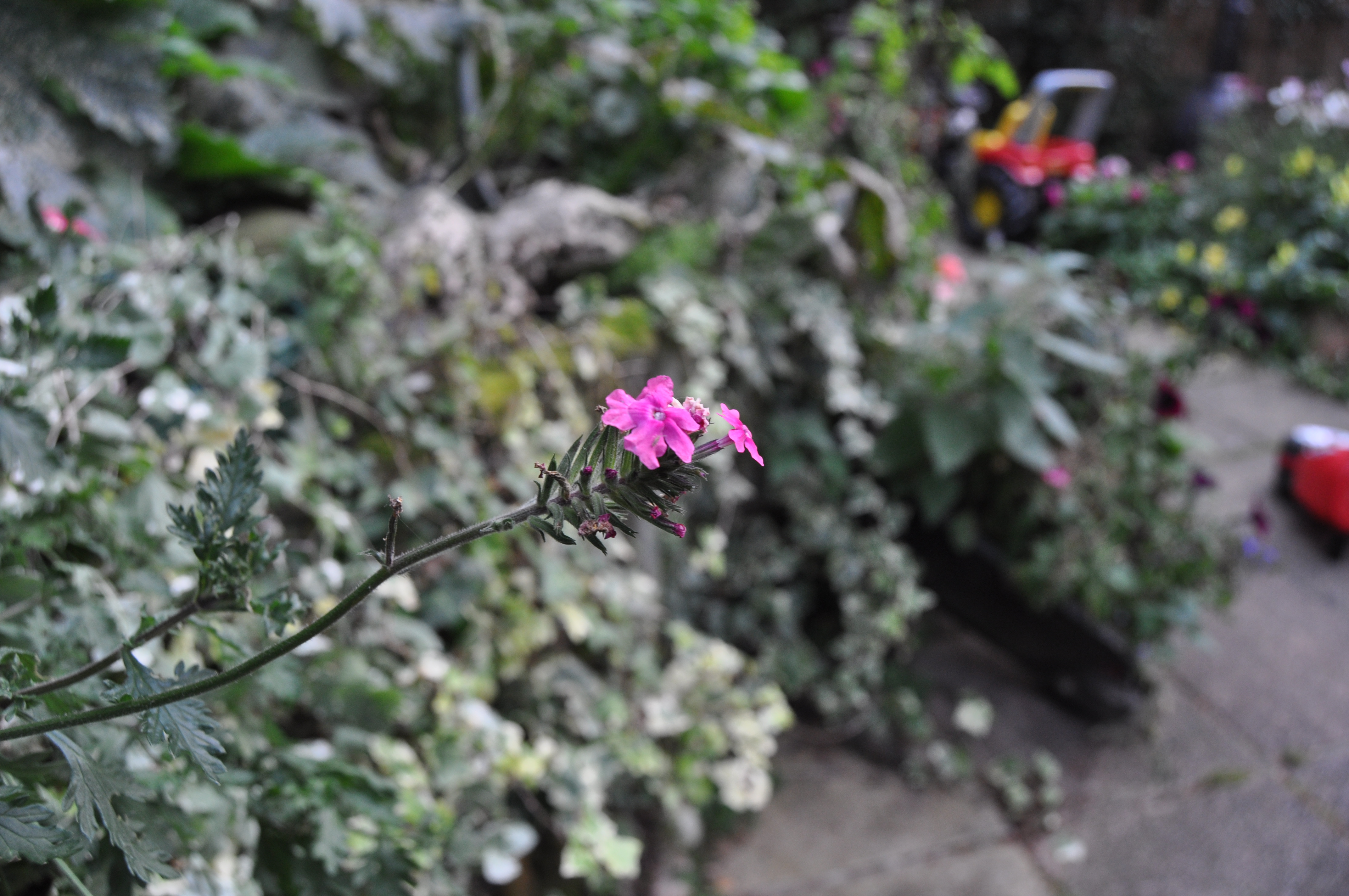
The time has come to put the garden to bed.
Or rather, the time has come to tame it, using a large chair or other implement, and battle it back to the beds from whence it came.
This Summer it has rampaged like some wild animal, out of its allotted rectangles of earth in this cramped little British garden, across the paths, around corners, towards the skies.
There is something sinister and slightly grotesque about its progress. The courgettes are punctured with holes from unnamable blight; the tomatoes, still green, bow over, clustering together in tight knit groups. It’s all a bit unsettling.
Even the flowers have strange attitudes. Nigella, the tobacco plant, has gone to seed and is peppering the displays with shrivelled seed pods. The Dahlia and the cosmos are a pair of blousy old women, one developing unseemly girth and the other outstripping the bird bath in its scramble for supremacy.
Every now and then baskets and beds sport a bald patch. These patches have a perfectly good explanation: they are caused by the impact of my son’s new basketball.
He asked for a hoop and ball for his birthday, and Dad worked for a week to fashion one which will still be standing long after the rest of the house has fallen down. It would be churlish, now, wouldn’t it, to limit play for the sake of a few blooms?
The garden is prey to rampant playing. There are trampolines and tractors and even a small but perfectly formed Mercedes standing, waiting for the return of the natives. And when they arrive, they don’t always stick to the paths. There’s a tractor in the middle of the flower patch right this minute.
Still, I should look on the bright side. Last year I planted nasturtiums. If you haven’t met these mini-triffids, they spend the first part of the summer looking folksy and exactly like the Flower Next Door, and then sometime in August, they turn into a veritable bunny boiler of the plant world and encroach on every bit of outdoor personal space which belongs to you. If you leave them long enough, they will try to come inside.
Be very afraid.
The garden has borne fruit. I have had courgettes and beans all Summer long, if given with a slightly bad grace. The courgettes are such wanton hussies: they will proffer up their wares to anyone with a bit of earth and a watering can. And those runner beans: they give them to you whether you want them or not.
The garden is simply louche at this end of the year: the plants offer very little resistance when you attempt to uproot them. And at the weekend I shall very likely be out there with too many dustbin bags to count, rendering those rectangles bare and brown once more.
There was a time when gardening was one of my obsessions.
These are famous in my family. I develop an interest and it becomes all consuming. I read all there is to read about it, get the T shirt, get my feet under the table. Past obsessions include cross stitching, baking, meditation, pop psychology and swimming.
But all-embracing as these obsessions are, they generally fade away. Circumstances conspire, or another obsession appears to shunt this one unceremoniously off stage.
One Summer, I walked into the garden of our new house in Kent, which was very bare and basic. And I thought: if I had planted flowers, they would all be in bloom now, and my quality of life would be so much better.
Something clicked and I went into overdrive. I tracked sunshine and shadows across the garden. I drew intricate garden plans with watercolours. I bought a greenhouse. I dug and planted borders.
Phil began to panic as more and more turf disappeared. Because he had his own plan for this miniscule garden. He wanted a putting green.
We bartered levelly. Finally it was decided I could have extra flower beds in return for sinking small terracotta flower pots in nine carefully negotiated sites around the garden.
The Summers progressed and at that time my garden was my child, and so it grew small but beautiful. But it was also a very busy golf course.
Friends would come and stay most weekends. Phil’s father put up a floodlight worthy of a football ground. And we would dine inside, and then step out into the florid perfumed evening and play riotous nine-hole golf until late, using only ancient charity-shop clubs and the ancient technology of terracotta.
On the rare weekends when we didn’t have visitors, we often made our way to a place called Sissinghurst Castle.
The castle was the home of the writer, poet and gardener, Vita Sackville West. Her life was strong, stark and uncompromising, filled with tempestuous relationships with both sexes.
But there were constants throughout the life of this extraordinary woman, who was cast by Virginia Woolf as a man – Orlando – in her novel of the same name.
The constants were her husband, Harold Nicholson, a diplomat, MP, journalist and writer: and her castle and garden.
Sissinghurst is all order and artful disarray. It has one garden which is themed totally in white and surrounded with box topiary: and it has a stunning wildflower meadow which shows the castle tower off at its most graceful.
Every corner has a new piece of excellence, a fresh surprise. I met some of my favourite plants there: I still recommend them to my friends: and one day, when children have stopped driving large plastic tractors through my flower beds, I shall plant them again.
In the meantime, I’ll just have to make do with going to see other people’s gardens.
 Kate Shrewsday
Beautiful!
Thanks Tokeloshe:-)
There’s nothing green about my fingers, even my indoor plants die on me – except for one darling ficus that took over the well-lit corner it stood in. Yet I have planted many gardens in the hope of having a wonderful display, only to find the night scented plants were my greatest successes, which is fine if one does not mind being surrounded by dead-looking plants during the day, while enjoying perfumed nights.
That sounds just perfect to me: it is what I have been doing all Summer.Don’t you love those ficus? They just keep going, no matter what. Indoor plants are often a problem for me too, mainly because it doesn’t rain indoors.
Lovely, I so identify with you about going hell-for-leather at new hobbies. My knees aren’t so keen on gardening anymore, but I now employ the services of Godwin-Who-Does and direct him once I’ve visited the nursery.
Vita Sackville West, a not-very-nice woman who could pen a sense-of-place like few other writers.
Thats VS-W summed up to a tee:-) Place was incredibly important to her I think. Probably more than people. She never got over losing Knole, the Sevenoaks tudor fortress a few miles up the road which was her childhood home. Funnily enough, the visual language of Knole is far more Vita than Sissinghurst. It’s perplexing actually, because for all its clipped topiary, Sissinghurst is actually quite blousy.
Nice
Kate thanks for the compliment.
Trouble is the board and hoop are suspended from the house!!!
Thanks , Dad
Yes. With our record on DIY, that could prove a problem.
Thanks Dad;-)