When I was a music student, I was required to write an essay every two weeks.
With a different musical focus each time, many would have loved ferreting in the cathedral-like library, rooting out manuscripts and musical wisdom.
And I did, honest: but I worked harder for some musical periods than others.
When I was under the tutelage of my small wild-haired classical specialist, the one with the impossibly huge cranium and an ego to match, I worked quite diligently.
For our beloved head of department, with that air of absence that follows the very kind and clever, I would dig up and analyse Bach sonata after concerto after prelude, and all their accompanying academic wisdom, to enrich our tutorials.
My personal favourite, a Tchaikovsky nut with a love of Russian music and a contract with BBC’s classical radio station: I would write to the ends of the musical world for this man.
But our fish-faced, clever mediaeival specialist: him I was not so taken with. It is true he taught me a huge amount about how to write and interpret those time-distant mediaeval manuscripts, and I have never forgotten a slide show he gave about Italian architecture and how it linked with early baroque music. He was a very good teacher indeed, now I come to think of it.
But I couldn’t warm to him, and I couldn’t interpret his wretched breves and semibreves which came from a musical land which time has almost forgotten.
The time came for me to have four essay tutorials with him, alongside another student and very competent musical researcher.
I was so in awe, my brain seized up, and I just couldn’t think what to write.
I researched under duress, and then wrote, every word a grudge offering.
We sat and read our essays, two weeks later. My friend read hers, and some erudite discussion followed. And then, I read mine.
Reader, you cannot imagine: he loved it. What he loved was the way I had worked my argument, made my case, stated my claim. He was never one to rave, but he did enthuse in a fishy kind of way.
You could have knocked me down with a feather: the last outcome I would have predicted would be success. And yet I had walked through the lion’s den, unscathed.
The next time, I did a little less research. And the next time, a little less. By the time I faced my fourth tutorial, I had barely seen the inside if the library.
I took out my offering and as usual, read it out loud.
When I finished, there was a long, pregnant pause.
The great man marshalled his thoughts.
And then , he said: “That was the most beautifully written and cohesive piece of writing -without it actually saying anything – that I have ever heard.”
And the rest is silence.
It is quite unsettling just how far the gift of the gab can take you, without you actually having to say anything of any meaning.
We have all come across the levitating colleague: who manages to climb that slippery career ladder by floating supernaturally on the power of their words.
But what is it all built on?
Enter John Self, the antihero of all antiheroes. Not my usual reading fodder, but I ran out of books on holday and Phil had Martin Amis’s Money on his bookpile.
Not for the fainthearted, this disintegrating graveyard of self belief. John Self is a succesful director of adverts. By the time we meet him he is a casualty of all that money can offer, an alchaholic, hooked on fast food and porn, and spending far too much on not very much at all.
It is hard to summarise the plot. It’s just a messy jumble of preoccupations and neuroses, from a man who is unable to analyse and correct his own life.
At one point, cheekily, Amis walks into his own novel. He tries to put Self back on the right track: but fails. Self is not impressed with Amis, either, because he earns loads of money but lives like a student.
I loved Amis’s style in this novel. He was at that point, before clever became too important, when he could put his finger on what happens when people climb and talk and talk and climb and succeed.
Time to back off from that heady commercial world, and the frantic seductive lights of New York.
One academic stands out, for me, as being a man who talked, but with rock solid foundations.
The trouble was, the basis of his arguments were so very fabulous, in the oldest sense of the word.
Because my academic is fictional, and so is his research. Dr Abram Van Helsing, M.D, D.PH, D. Litt. etc. distinguished himself because when he treated his vampires, he really knew what he was talking about.
Bram Stoker’s great strength was making the incredible sound credible. And never more so than with his Dutch professor, who has an intricate framework of theory surrounding the symptoms and treatment of those infected by Nosfiratu.
But what a delicious character he is, what a comforting arrival when all is chaotic and one can see nothing but victims far and wide.
Not the least of these is the beautiful Lucy Westenra, already infected and developing some of the tell-tale symptoms: anaemia, tired listlessness, puncture wounds and heightened senses: she can hear servants whispering on the other side of the house.
But Dr Van Helsing carries out transfusions when they are the newest aspect of medical science: he draws conclusions from symptoms and acts with decisive, sometimes brutal assurance, borne of expertise in this narrowest of areas of medicine.
Stoker’s approach is totally absorbing. Because he doesn’t write a narrative in his iconic novel: rather, he creates a set of documents out of thin air.
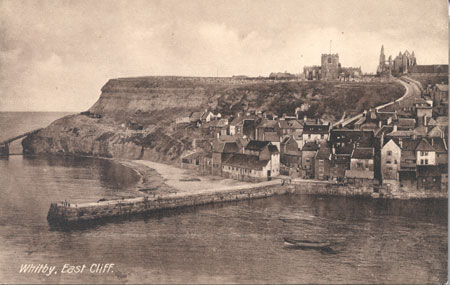
Diaries, letters, doctor’s notes: even an invoice for the delivery of crates from Whitby to London. He conjures an alternative reality by using a deeply credible set of paperwork.
And the result is so compelling that I often listen to it, on my ipod, all night, waking to this letter or that account, it all its Victorian gothic sepia quasi-scientific glory.
I made a meringue essay, all words and no substance; John Self led a meringue life, which caved in because it had no substance.
But Bram Stoker and his charismatic academic?
I wonder if Stoker used words, and performed the greatest miracle a writer can pull off: he started with no substance, and created something so compelling, it became a lasting, solid legacy.
 Kate Shrewsday
You have a gift, Kate, and you use it very well. Plenty of style and loads of substance.
The good doctor would approve.
Shucks, James, thanks. I’d like to think I had gained substance over the years, but I fear I just borrow everyone else’s…
Have you started writing that book yet?
This is it, Jules, this is it.
How he’s love to read you pieces now, Kate, that wonderful “fish-faced, clever mediaeval specialist”…. 🙂
Indeed. All except that bit…..:-D
Sorry. Did not proof read
How he’d…
(ASDF letters on keyboard all worn out and I don’t touch type properly….)
Wouldn’t it be lovely if WordPress would let us edit our comments? Liz Carmichael made me laugh out loud with her protests…
…in a fishy kind of way.
it’s that kind which leaves me fulfilled after reading one of your posts.
so is this really it? the IT.? what a lovely, breathing body of work you are creating. and doing it every day at that.
i want your discipline.
No discipline theue – something close to obsession I’m afraid, and my obsessions never last forever. Glad you liked the post. Your comments are such a complement coming from someone who posts the way you do. I loved your Bronte quote, never seen that before, it makes me want to go away and read a very long biography.
Of course he loved your writing, you have a rare talent.
I will seek out the Amis book, thanks.
I don’t think you are easily shocked and it is very funny indeed. But very blokey. And thankyou, Cindy, coming from you that’s a huge compliment:-)
Not missing your post is my excuse (reason) for coming back online.
You really do have to get started on that book – I’ll volunteer myself as your editor, and make sure all the substance for a good read flows all the way through.
We could have such fun…..welcome back, hope that head is behaving….
Fabulous writing, Kate, and definitely not meringue!
Thanks Naomi:-) Borrowing the ingredients from Mr Stoker must always help.