I rarely invite you inside my classroom: mainly because I can’t write about the children, and that’s such an omission because every one, in their way, is a capsule gem waiting to dazzle the world.
But I can write about what I do. And if you had sat at the back of my classroom today, you would have found me striding up and down, waving my arms about in the style of the best absent minded academics, absolutely forbidding anyone to write anything which rhymed.
It is poetry week on the learning schedule. The older children had Ted Hughes’s Dog to read. Which rhymes; affably, and with the most deliciously dogged of humour.
Everyone, by the end of this week, will have begun to write their own poetry. What a breathtaking voyage of discovery that must, vitally, be.
For to deaden a human’s innate love of poetry is, to me, a mortal sin.
How many of us have written books of the stuff, charting every boyfriend or girlfriend, every rise and fall of our rollercoaster lives, in poems long and short, rhyming and rambling, narrative and non-narrative, sensical and nonsensical?
Poems are nuggets of kryptonite, incendiary moments concentrated like deep-red cherries into a thick syrupy cordial. They are concentrated life. They are the stuff of our spirits. They are life distilled into a few words.
Poets, I told the kids, gesticulating widely, choose which clothes to wear: iambic pentameter, verse or prose, four lines or two lines, one dwindling line: and then they make miracles out of the straightjackets they have chosen.
Look at my friend Pseu, I ranted affably to my charges. I met her in a blog. She actually chooses to write a poem every day.
And every day, she creates a poem which only has three lines, a little Japanese brace of five syllables, seven syllables, five syllables. Within it she creates a tiny perfect concept, delicate like a miniature lotus flower.
But can’t we make it rhyme? my little ones chorused.
NO! I exclaimed laughing, no, you most certainly cannot. For the poet begins with structure and rhythm and meter, children, and moves on to economy of expression and subtlety of words: and really, if you can manage these two, then you’ll be a man, my son.
(Or a woman, my daughter).
Rhyme is the icing on the cake. A virtuoso performance, I sermonised.
I came out at breaktime to find something to show them. Running through my head were the words: “I ‘ve found a small green dragon in the woodshed”….
I thought it was written by Charles Causley, and my friend Jan (who is a complete oracle; everyone needs one oracle in their lives) went scurrying off to track the dragon down in her beautiful bright new library.
When she had gone, Google informed me mechanically that its author was in fact Brian Patten. He wrote:
I’ve found a small dragon in the woodshed.
Think it must have come from deep inside a forest
Because it’s damp and green and leaves
Are still reflected in its eyes.
I read the whole thing to the older children, and they saw that the rhythm came from the very words, and the power came from strong, distilled imagination.
That wonderful enjambment, the lingering longing which is never spoken, but haunts the gap between the third and fourth line. If only, if only I had a dragon in my woodshed.
Meanwhile a Devil’s Advocate had settled itself comfortably at the back of my mind.
“What part does that rhyme play, then?” it demanded from its leather armchair. “In unskilled hands it is is a cudgel. But in the hand of the master, it is a conductor’s slender baton.
“Look at Alfred, Lord Tennyson.”
Tennyson’s Lady of Shalott dances onto the edge of my consciousness whenever I watch the leaves on a willow shimmer from green to white.
Willows whiten, aspens quiver,
Little breezes dusk and shiver
Thro’ the waves that run forever
By the island in the river
Flowing down to Camelot.
Four grey walls and four grey towers
Overlook a space of flowers
And the silent isle imbowers
The Lady of Shalott.
It is almost a sin to continue writing. Who can follow this?
As I thought on in the undertow of my madcap, animated day, I began to waver.
Is verse sublime because it draws us out into the middle of the lake, away from verbal expression towards what lies beneath? Are we treading a path between words and music?
And if this is the case, when a child wants to write rhyme, should we not just let them walk out on the lake, even if the results are clumsy and strangely pedantic?
My daughter has written books and books of poetry, a lot of it rhyming. Some of it is just what I have described: a rhythmic exercise on a trite theme. But as the poetry develops I begin to be startled by the occasional line.
When she first played this instrument she was pedantic and wielded a charming little cudgel. But she worries at verse like a dog at a rabbit hole, and I do believe I might be watching a metamorphosis in her rhyme. The butterfly is not out yet.
But she, and children like her, convince me that modelling clumsy verse is a stage in developing an art form which is separate from writing and apart from music. It is poetry, a land between prose and music, where a chance choice of word, or pause, or mannerism, can portray a whole subterranean landscape.
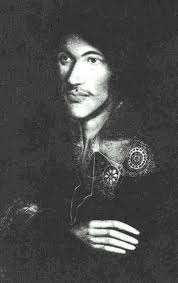
As did that metaphysical master, John Donne. While the following verse is a clarion cry, declaring war on Death itself, the undertow reveals an internal battle in the poet’s heart.
“Thou art slave to Fate, Chance, kings, and desperate men,
And dost with poyson, warre, and sicknesse dwell,
And poppie, or charmes can make use sleepe as well
And better then thy stroke; why swell’st thou then?
One short sleepe past, wee wake eternally,
And death shall be no more: death, thou shalt die.”
And confronted with all the force of one of my favourite sixteenth century poets, I have to concede.
Rhyme is part of a poet’s reasoning, as vital as meter and word: and as elemental as the very beat of our hearts.
 Kate Shrewsday
Don’t ever lose your passion! Maddie must get it from you… 🙂
Thanks Jules:-) I’d love to ignore the entire petty national curriculum and teach poetry properly…
I am greatly relieved at your conclusion, Kate. Half way through your blog, I
was getting ready to destroy at least half of my poems.
I have not been prolific, but I have loved writing them, and rhyme comes when it does,
– it is not contrived, it generates itself for me.
So I was pleased when I got to the end.
Lovely blog, kate.
Love. Dad
Phew! That was a close one! Those poems are a wonderful chronicle of the years, and very dear to me.
Love this post! You write so beautifully.
Julia, glad you like it….I have been enjoying your site too….the Lady Macbeth stuff is fabulous, and I love the switch to darning today:-)
I agree with Julia- beautifully written.
How great if you could “ignore the entire petty national curriculum and teach poetry properly” as you told Jules you’d like to. Then again, it sounds like today was such a lesson for your students and may spark a life-long love in them.
Thanks so much Zoe:-) Here we are hamstrung by curriculum and assessment. Teachers are measured by how their children do in their tests, ad so many of us forget the glorious kernel of teaching: the ability to surf on the subconscious and bring 30 other human beings with you. Life is about so much more than prescription. Your blog shows us that every day.
Kate, these children are lucky beyond measure; you are a gifted teacher.
Thank you Cindy. Hope my poor beleaguered kids agree. One can measure a teacher’s effectiveness directly in proportion to how wildly they wave their arms about during lessons.
I wish you had taught me, Kate, as I may have discovered poetry as a child and not in my 40’s.
I wish, as the last wish could never come true, as you are younger than me, that I could have been a gecko on the wall in your classroom.
And talking of classrooms, may I share this poem, which I wrote in response to Carol Ann Duffy’s ‘Prayer’ ?
Song
Sometimes, even when we are defeated a tune
pierces us, a familiar, lilting refrain
so a child will halt his cry, seeing the moon’s
full face as lullaby lit through the open curtain.
And then, even with loss of voice, a new song
reveals itself. In class a child will raise
his eyes from the music score and listen
to the blackbird with his flowing phrase.
Sing as one in a choir. Time-table chants
haunted with echoes reach back over time
to childhood learning, the rhythm of Scottish dance
reels around unbidden as nursery rhymes chime
in a round. And the pounding metrical heart’s song
repeats relentless beating, on and on and on.
Haunting, Pseu, and very beautiful. Nice to see you out of your japanese straightjacket for a few stanzas…
Exquisitely expressed, Kate. I love how you term poetry “a land between prose and music”
Thanks Naomi: amazing how kids can make you think twice about things one though were set in stone:-)
psst…
i was a rhymer and author of many really bad, cliche, teeny bopper poems. (i mean really really bad poems)
so maybe…just maybe… there is hope.
I am beginning to think there is no such thing as a bad poem, providing it has the appropriate audience:-) Some of my old ones are gems of self expression which I fervently hope will never enjoy another human reader. The dog is occasionally used as an audience.
“For to deaden a human’s innate love of poetry is, to me, a mortal sin.”
Yes! Yes! Absolutely!
“…and then they make miracles out of the straightjackets they have chosen.”
Your students are so lucky to have a teacher who is a poet as well.
You and I both know the craftsman’s joy at turning a phrase:-)