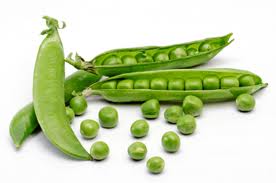
Today I plan to take a step in a pair of seven-league boots away from reality, far from motorways and appointments and tutorials and portfolios and even sausages for tea.
I have just issued a public proclamation concerning today’s dinner menu, and there was a wail of dissent from a small seven year old boy, who does not like green vegetables unless they are heavily disguised as tomato sauce.
But we all have to eat peas sometime.
And they can be so very useful.
So thought the impish monkey, who looked longingly down on a great Indian King and his closest, most trusted advisor, thousands of years ago.
The King was the ruler of a great city, Benares, a mighty civilisation which towered over the banks of the Ganges. Its streets were full of hustle, and the river was never without a wallowing water buffalo or a holy Brahmin at prayer.
Every now and then, the king thought to leave his majestic city to go hunting. Out into the countryside he would ride,with his friend, to something a little like freedom from responsibility.
Even Kings must get away from it all some time.
And the monkey happened upon the great man, as he and his friend stopped to feed their horses.
The monkey was peckish. He ate well, out here in the wilderness, with everything that nature had to offer him. But those peas the horses were eating – those peas looked good.
For these little primates there is only one way to get what you want: ambush. He waited for his moment. And then he hopped adroitly down to the horses’ trough.
The two men, watched, fascinated and amused, as those tiny hands scooped up more peas that either would have thought possible. This was a feast indeed. The monkey would not be hungry for a week.
And as they moved in to shoo him away he fled with the tiny gems in his hand, screeching his disapproval of their change in policy.
And then it happened: just one small pea dropped from his tiny grasp.
Now you and I would count our blessings, wouldn’t we? Grab the loot, forget the stray pea and leg it into the jungle.
But to monkeys, possession is an art. And in this elite corner of the artistic world, its practitioners are perfectionists. Consequences are unimportant in the face of possessing something new.
So when that pea slipped from the monkey’s grasp, with the little creature’s mindset, there was nothing for it.
He spread his palms to catch the errant pea, and all the rest cascaded down out of reach.
That wise counsellor who rode with the king laughed so much he could barely breathe. And the he turned to his King, and he said: Don’t make the same mistake, Sire. When you are greedy, remember that monkey.
I can’t help thinking our huge Henry might have yelled, “Off with his head!”. What wisdom to laugh along with such a close advisor and continue to learn the lessons of life. I wonder if this King was a great leader indeed, because he was open to advice.
Peas and beans play a part in the folklore of Western countries too. The stories seem much more facile than that thousand year old tale from the ancient old land.
There’s the English boy who chooses to do a deal for peas because some old codger says they’re magic.
On the face of it, a cow for a handful of beans sounds idiotic, and poor Jack is branded a fool for making a gullible exchange during a chance meeting along the road.
But the story’s ending belies its beginning. Jack chooses to take a risk, and courts the displeasure of his mother in doing so.
He lies, steals and cheats his way to treasures untold, telling himself that big ugly giant is fair game. Finally he murders the giant. And he and his mother live happily ever after.
Gordon Gecko would approve. Greed is good.
I admit to feeling a little discomfited by the contrast between the two stories, Indian and English, because I grew up with the latter. It makes me wonder what nasty little subtexts lurk beneath other tales which are second nature to me.
Best stick with peas.
Arranged marriage is a thorny issue. In royal circles it is a foregone conclusion. Must preserve that blue blood and those equine features for future generations.
But how do you check a princess’s pedigree?
Ah, you say, off to the genealogy department with you, hie you down to the College of Arms. Every proper princess will have scrolls and parchments and royal seals a plenty to vouch for her royal forebears.
Wrong.
When this particular Danish Prince Charming came to his time for marriage, he was adamant. He must have a real princess.
His mother had ways to make sure this happened. These mothers always do. So when a beautiful princess arrived helpless, soaking wet and alone at the door, claiming to be a real princess, she did not reason why, but put her machiavellian plan into action.
Servants cursed and stewards swore under their breath as the order went out: every mattress in the palace must be brought to the main guest room. A princess was coming to stay.
Every door in the palace was jammed by some maidservant or other trying to manhandle a duckdown monolith through the door.
And gradually all the mattresses converged on the cavernous four poster bed in the huge guest chamber.
But before the first mattress could be laid, the Queen Mother commanded sharply:”Wait!”
When every servant was banished outside the door, she placed one hard, round, dry pea on the bed. Then they streamed back in and the mattresses were piled high on top.
Of course, the princess could not sleep because she was a delicate princess, and the pea beneath the down rendered her black and blue.
The true princess may have had the personality of bilgewater, but the pea rendered her marriageable. The story, with its Danish roots and Hans Christian Andersen’s penmanship, is winsome and enchanting: but even the critics of the time were not enamoured of the message beneath the surface.
And so these unassuming vegetables have become story fodder throughout the world, and I have no doubt there are more pea consommes where these came from.
But each people deals with the little green spheres in a different way. The humble pea has sparked thoughts of wisdom, greed and plain vanity.
Who would have thought the tiny vegetable could reveal so much about human nature?
 Kate Shrewsday
The monkey story I like best, Kate, possibly because it is new to me.
The other pea/greed story is the monkey who reachen into a jar of
peas and filled his hand full. Then could not get his hand, big with peas,
out of the jar!
Don’t monkeys fascinate us?
Love Dad.
They’re big characters in the folklore of the countries where they live, with those glistening eyes and tiny perfect hands and the attitude of a street thief:-) My favourite is the one who knocks on the window in A Little Princess..
Ah, the lofty pea of literature. I love these little tales, Kate, and how you tell them here. For some reason I cannot explain, this made me think of an odd little book I enjoyed some years ago entitled “Ella Minnow Pea” – an epistolatory story of an island in which the letters of the alphabet are slowly removed until all that are left are lmnop, which has nothing to do with monkeys or princesses, just my wandering mind.
I do enjoy your blog.
Wandering minds are the best kind, Penny:-) It is just the sort of pea-related literature which would have gone into the post had I known about it!
Thank you. I’m off to google your island.
You do entertain well with your writing, Kate, every morning a treat.
And this comes to mind from this post:
“I am as comfortless as a pilgrim with peas in his shoes – and as cold as Charity, Chastity or any other Virtue.” Lord Byron
I knew you’d find something, Cindy, and what a gem:-) From one of my favourite characters too…
Do these pea stories help you in persuading small children to eat them?
I’m lucky, in that all the males in my home love peas. To the extent that they are the preferred vegetable and they’d have them every day. (Thank goodness for frozen ones… who’d want to be shelling peas every day?)
A quick and popular emergency recipe in our house, for one of those days when the turn around of only 20 minutes or so is as follows.
Cook pasta spirals or tubes or similar for 7-8 mins, then at the end add frozen peas, generous amount and bring back to the boil. Cook until peas are just done. Drain. Add generous amounts of green pesto and shake well. Snip some flavoursome cold meat, such as pepperoni, or cooked bacon into the mix (and if you have it some cream or cream fraise – not necessary, but nice) then serve.
Maybe that’ll get over the tomato sauce peas?
I’ll give it a try! And if it doesn’t, I get to eat it all at the end. You are a fund of extremely useful infromation Pseu:-)
How clever Kate! I’m disappointed that I did not think to do this post first although I don’t know that I would’ve ever teased out the Indian tale. Thank you for placing new dignity with the pea this morning – even if my 8 year old may wail.
Ah, another minor who disputes the sovereignty of the pea. I am in excellent company then. Thanks, Tammy!
I was oft told the monkey story when I was younger. Though it may have been with bananas instead of peas, I do not remember!
My son would prefer it if it were bananas, he loves those. Maybe your storyteller had the same end in mind as I did: to persuade a little boy to eat his peas….
Beware the banana overload… my two ate thousands in their youth and babyhood and won’t go near them with a bargepole now. Though Cyclomaniac still uses them as cycling fuel 🙂
I’ll bear that in mind….:-)
I’m fond of blackeyed pea, chickpea, purple hull pea, sugar pea, and cream pea, but the canned English pea was for twelve years a staple of the school cafeteria and the bane of my existence. Oh, for hula hoops and fairy cakes! Finally discovering the frozen variety was a relief.
Your comment about the princess having the personality of bilgewater reminds me of a line from the first episode of Edith Wharton’s The Buccaneers, which I watched today. Lord Brittlesea (which I think is spelled Brightlingsea) tells his uninterested eldest son that the beautiful American girl a la Jennie Jerome is just the kind he likes–boring and rich. Do peas become coins in their next incarnation?
Aaah, maybe the pea is a deep subconscious social symbol for a coin….now that is a thesis waiting for someone to write, but with our upcoming student loan system it won’t happen in the UK.
Your list of peas is pure poetry.
P.S. I LOVED “Ella Minnow Pea.”
Priceless, isn’t it? Thanks again for that, Penny:-)